Singapore Upgrades EV Charging Standard to Support Wireless Charging and New Technologies
Singapore’s EV transition has reached an important milestone.
From 1 April, the existing Technical Reference 25 (TR25) has officially been upgraded to the new Singapore Standard SS 722, introducing updated requirements for the design, installation, maintenance, and operation of EV charging stations.
This move reflects how quickly the EV landscape is evolving — and the need for standards to keep pace with new technologies.
What’s Included in the New Standard
The upgraded SS 722 now provides a framework for several emerging charging solutions, including:
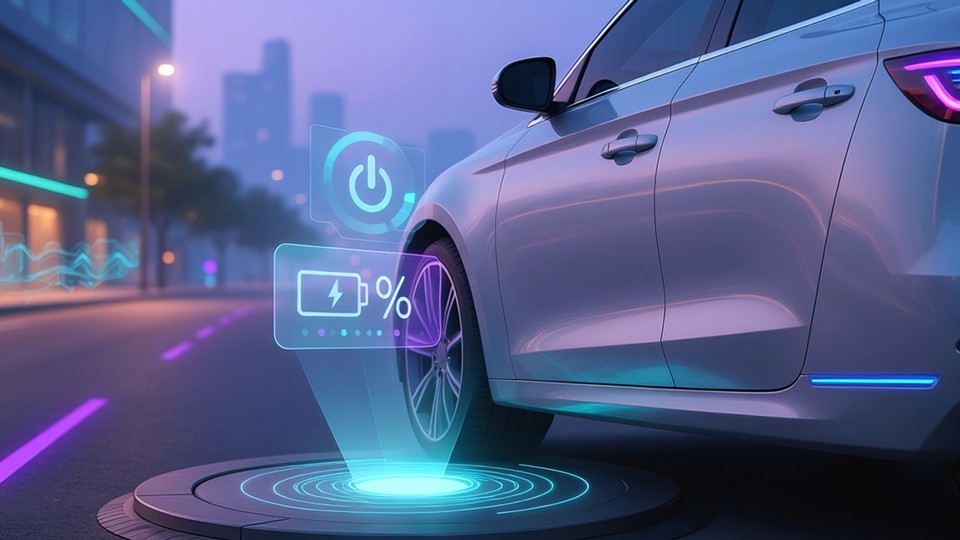
Wireless EV charging – where compatible vehicles can charge simply by parking over a charging pad, without the need for cables
Mobile EV charging systems – chargers mounted on moving vehicles that can provide charging at different locations
Battery swap stations for four-wheelers – allowing depleted batteries to be exchanged for fully charged ones, reducing downtime significantly
This is especially relevant for commercial and heavy vehicle use cases, where charging speed and operational efficiency are critical.
Improved Safety for Fast Charging
The new standard also updates requirements for DC fast chargers, aligning them with the latest international benchmarks.
Enhancements include:
Stricter temperature controls
Better cable insulation checks
More precise power output
All of which contribute to a safer and more reliable charging experience for EV users.
What This Means for Singapore
This upgrade signals that Singapore is preparing not just for higher EV adoption, but for a more advanced charging ecosystem.
The market is expanding beyond passenger vehicles into logistics, commercial fleets, and industrial transport — where solutions such as battery swapping, mobile charging, and faster DC systems can play a major role.
How We See This at MNL
At MNL Solutions Pte Ltd, we view this as a positive step for the industry.
As an Land Transport Authority (LTA) Singapore Singapore approved EV Charge Point Operator (EVCO) and systems integrator, we understand that future-ready infrastructure must evolve together with national standards.
Charging today is no longer just about installation.
It is about safety, reliability, adaptability, and long-term performance.
Singapore’s EV journey is progressing quickly.
And with standards like SS 722 now in place, the foundation for the next phase of charging innovation is becoming clearer.
Which emerging technology do you think will gain traction first — wireless charging, battery swapping, or mobile charging? Let us know in the comments.
📩 projects@mnlasia.com 📞 +65 9338 1570 Lai Yuan Weng 🌐 https://mnlasia.com/